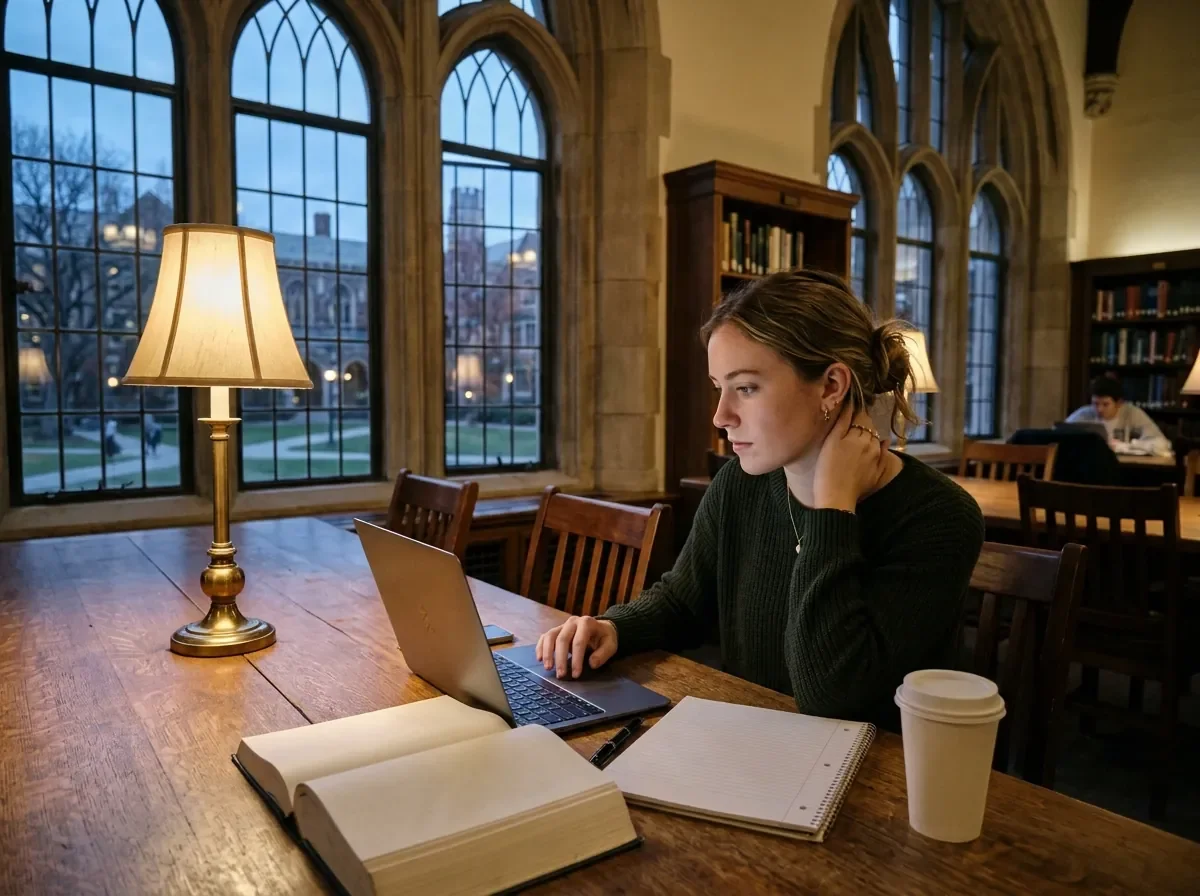
Most of the college students I see are still turning in their work and making it to class, and from the outside they seem fine. Underneath, many are struggling with perfectionism, fear of failure, or constant worry about how others perceive them.
I’m Brooke Sundin, a Licensed Marriage and Family Therapist working with college students in California, Florida, Utah, and Tennessee. A lot of students quietly wonder whether this is just what college feels like for everyone. The short answer is that you’re far from alone, but common doesn’t mean you just have to push through it.
What Causes Anxiety in College Students
A 2021 review of 41 studies on university undergraduates, published in AIMS Public Health, grouped the risk factors for stress, anxiety, and depression into six areas: psychological, academic, biological, lifestyle, social, and financial. A list like that makes them look separate, but in real life these stressors rarely arrive one at a time.
The most obvious is the loss of the structure that high school provided. Back then, other people kept you on track: parents noticed your habits, teachers checked your progress, and someone else built your schedule. College takes most of that away just as the workload gets heavier, so it’s easy to fall behind on the reading without noticing until a midterm makes it obvious. Outside of class, you’re suddenly managing your own meals, laundry, money, and medical appointments, often hundreds of miles from the people who used to notice when something was off. Heavy coursework is a problem on its own, too: it was one of the most frequently identified risk factors in that review.
Financial pressure is part of it as well. In one study covered by that review, a lower socioeconomic background was a strong predictor of anxiety and stress. For some students, anxiety is partly a response to real financial strain, and that deserves to be taken seriously.
Another source is harder to spot because it happens inside your own head, and it rarely gets said out loud: the pressure you put on yourself. When high standards turn into perfectionism and harsh self-criticism, good grades stop feeling reassuring, because as soon as you reach a goal, you raise the bar again. Sometimes that pressure is less about grades and more about how you come across to classmates, roommates, and professors. That’s closer to social anxiety, where the core fear is being judged or embarrassed. It often shows up as avoidance: skipping office hours, staying quiet in discussion sections, or leaving social plans early.
Then there’s uncertainty about what comes after college: what to major in, whether you’ll find work, where you’ll end up living. That worry often gets sharper as graduation gets closer. For some students it turns into a specific dread about life after college, and for others it carries into their mid-twenties as what’s often called a quarter-life crisis.
Most students are dealing with some mix of these, but one is usually causing more trouble than the rest. Figuring out which one that is gives you a place to start, and that works better than trying to fix everything at once.
Why Lost Sleep Makes College Anxiety Worse
Sleep is often the first thing students give up when a semester gets busy, usually without ever deciding to. Losing it doesn’t seem to cost anything that night. A missed deadline has obvious consequences, but staying up until 2 a.m. doesn’t. The cost shows up the next day, when you’re sitting in class and can’t follow the discussion, or you’re more irritable than usual.
Anxiety and lost sleep feed each other. Worry keeps you awake, and a short night leaves you more anxious the next day. Caffeine gets you through the afternoon, but it can also push your anxiety higher and make it harder to fall asleep again. By the end of the week, you’ve had several rough nights in a row, and an assignment that should take two hours takes five.
When I look at a student’s sleep, I also want to understand their eating habits, physical activity, screen time, and whether they’re making time to recharge or constantly pushing themselves to do more. Sleep directly affects emotional regulation, concentration, and your ability to manage stress. Rest is part of taking care of your mental health. It isn’t a reward you have to earn by finishing everything else first.
One practical thing to try this week: pick a night when nothing is due the next morning, choose a time to stop working, and stick to it even if there’s more you could do. Notice how that night goes and how you feel the next day. That will tell you more about your relationship with rest than any general sleep advice can.
How to Deal With Test Anxiety in College
Exams pack all of these stressors into a few days, which is why exam season is often when students decide something is actually wrong.
In therapy, we work on recognizing the cycle of anticipatory anxiety, preparing for tests in a balanced way, and practicing strategies to manage the physical symptoms of anxiety during an exam.
Anticipatory anxiety starts well before the exam does. You picture yourself going blank, your body reacts as if it’s already happening, and rehearsing that failure in your head wears you out almost as much as the real thing would. By the time you sit down to take the test, you’ve already lived through it many times in your head, which is a big part of why you feel so drained.
The night before a test, balanced preparation usually helps more than two extra hours of studying when you’re too tired to absorb anything. During the exam, if your mind goes blank, stop trying to force the answer and give your body a moment to settle. Going blank is more often a spike of adrenaline than a real gap in what you know, and it tends to pass as the adrenaline does. If the physical reaction is strong enough to feel like a panic attack, with a pounding heart or shallow breathing, simple exercises for panic attacks, like making your exhale longer than your inhale or grounding yourself in what’s around you, can help it pass.
One belief I challenge often is that you need to feel completely calm to perform well. Trusting that you can keep working through a few uncomfortable minutes will do more for your next exam than trying to get rid of the nerves beforehand.
How to Tell Normal College Stress From an Anxiety Problem
Anxiety is common in college. A 2022 meta-analysis of 64 studies covering more than 100,000 college students worldwide found that about 39% screened positive for anxiety symptoms. Screening positive on a questionnaire isn’t the same as a diagnosis, though, and knowing anxiety is common doesn’t tell you whether yours needs attention.
It’s true that stress is a normal part of college, but there’s a difference between experiencing stress and feeling like it’s taking over your life.
That difference can be hard to see from the inside, because anxiety doesn’t always look like someone who can’t get out of bed or make it to class. In a student who’s still getting through the semester, it can look like:
- Overpreparing
- Constantly second-guessing decisions
- Struggling to fall asleep because of racing thoughts
- Feeling exhausted from trying to keep up with academic and social expectations
None of that looks like a problem from the outside, and often it doesn’t feel like one from the inside either. That’s how students end up carrying it for years without telling anyone.
Rather than measuring your struggle against everyone else’s, I encourage students to look closely at how anxiety is affecting four specific areas: your sleep, your relationships, your academic experience, and your ability to enjoy things. It also helps to look at how long the feeling has been going on and whether it lifts when the stressor does. Ordinary stress rises before an exam and drops once it’s over. An anxiety problem keeps going after the deadline has passed.
Even among people who do meet criteria for an anxiety disorder, severity varies widely. National Institute of Mental Health figures show that about three in four US adults with an anxiety disorder in a given year have a mild or moderate case. Anxiety sits on a spectrum, so the more useful question is how much it’s costing you week to week, whether or not you’d qualify for a diagnosis. A blog post can’t diagnose anyone, but here’s one check you can run this week: notice whether your worry stays high on a day when nothing is due.
Why Students Don’t Ask for Help
Among people ages 20 to 24 with an anxiety disorder, only about 16% seek professional help, a lower rate than any older adult age group, according to a review of research on young adults. In one study it cites, more than half of young adults who met criteria for serious psychological distress said they didn’t need treatment.
It’s tempting to read that as denial, but I don’t think that’s what’s happening. Students hear constantly, from every direction, that becoming self-sufficient is the main point of college. It’s reasonable to conclude that handling anxiety alone is part of that. The reasoning holds together, which is exactly why it’s hard to argue with. What it misses is that learning to manage anxiety, with support when you need it, is part of becoming self-sufficient.
I remind students that struggling with anxiety isn’t a sign of weakness, and asking for support doesn’t mean you aren’t capable of handling things yourself. Therapy can give you tools and a space to better understand yourself, so you feel more equipped to navigate challenges independently over time.
Is Therapy Confidential for College Students?
Yes. If you’re 18 or older, what you share in therapy is confidential, with a few legal exceptions.
I want students to know that therapy is a space where they can feel safe being honest and that their privacy matters. I explain confidentiality and its limits upfront, while also helping them think through what support they may want from their parents, if any, so they can feel more comfortable taking ownership of their mental health.
How I Work With College Students
Many students assume they need to get rid of anxious thoughts before they can move forward. In therapy, I help them understand that anxiety is a normal human experience and that they can learn to respond to it differently rather than letting it dictate their choices. That’s the core of Acceptance and Commitment Therapy, and I also draw on Cognitive Behavioral Therapy to work on the thinking patterns that keep worry going.
Sessions are online, so you can meet from your dorm or apartment without adding a commute to an already full week. Much of the progress happens between sessions, as you try new ways of responding to anxiety in real situations, and we’ll set a pace that fits your semester.
If you want to find out whether individual therapy makes sense for you, a free 15-minute consultation is the lowest-commitment way to start.

About the Author:
Brooke Sundin, LMFT
Owner and Therapist at Light Minds Child and Family Therapy
Brooke Sundin, LMFT, has over ten years of experience helping children, teens, young adults, and parents navigate anxiety, OCD, self-esteem issues, and major life transitions. She currently provides telehealth therapy services to families and young adults across California, Tennessee, Florida, Utah.
Learn More About Brooke