
Treatments • SPACESPACE treatment for anxious children in Los Angeles
Supportive Parenting for Anxious Childhood Emotions (SPACE) treats childhood anxiety and OCD by working with parents rather than the child. Developed at the Yale Child Study Center, it teaches parents how to offer support without accommodating anxious behaviors.
Recognizing the patternYou might be here because…
If your child won’t go to therapyThey’ve told you they’re fine, or that they’ll go later, and later keeps moving.
You answer the same question every night because the alternative is an hour of tears.
You’re no longer sure which of your habits are helping and which are keeping the anxiety going.
If you’ve become part of the routineBedtime needs you in the room, then in the doorway, then back in the room.
The morning has steps only you can do, and the list gets longer.
Your child asks you to check, promise, or wash something for them, and you do it because it works, for about ten minutes.
Parents often rush to reassure or fix the problem, which unintentionally sends the message that their child cannot handle distress. The relief is real for everyone, and it tends to be short, so the next request comes a little sooner. SPACE starts from the assumption that you do these things out of love, and that they can change without the love going anywhere.
The treatmentWhat SPACE is, and how it works
SPACE was developed by Eli Lebowitz at the Yale Child Study Center as a treatment for children and adolescents with anxiety and OCD, and it is delivered entirely to their parents. Your child is still the patient, even though they never have to be in the room.
In a randomized trial at Yale, SPACE given only to parents reduced children’s anxiety as much as cognitive behavioral therapy given to the children themselves, for ages 7 to 14, and it reduced family accommodation more. The trial is published in the Journal of the American Academy of Child and Adolescent Psychiatry, and the International OCD Foundation describes the program in its treatment guide.
Support
Support means responding in a way that tells your child two things at once: that you can see how hard this is, and that you’re confident they can handle it. That pairing is the whole of a supportive statement, and it is harder to say than it looks when your child is in tears.
Accommodation
Accommodation is everything you do to help your child avoid or get through their anxiety, from the extra reassurance to the places the family no longer goes. Almost every parent of an anxious child does some of this, and reducing it, gradually and with a plan, is what SPACE works on.
SPACE empowers parents with tools and a plan for removing accommodations that tend to reinforce anxiety and OCD symptoms.
The course of treatmentWhat the work looks like
01
Mapping the accommodations
We start by listing what the anxiety currently asks of your household: what you do, what you avoid, what you say, and how often. Most parents are surprised by the length of the list and relieved that it finally exists.
02
One change at a time
You choose a single accommodation to reduce, we plan exactly how, and you tell your child about the plan in advance. Nothing is asked of them, and nothing is sprung on them either.
03
The supportive statement
Between sessions you practice responding with acceptance and confidence in the same breath. It can sound like, “It makes sense that this feels scary. You’re stepping into something new, and we can figure out how you’ll handle the hard parts.”
04
Holding the plan through the pushback
Your child will object, sometimes loudly, and the sessions cover how to stay calm and consistent when that happens. This is where parents most want examples of language, and it is where we spend the most time.
A typical course runs about twelve weekly sessions, adjusted to your family rather than run to a fixed count.
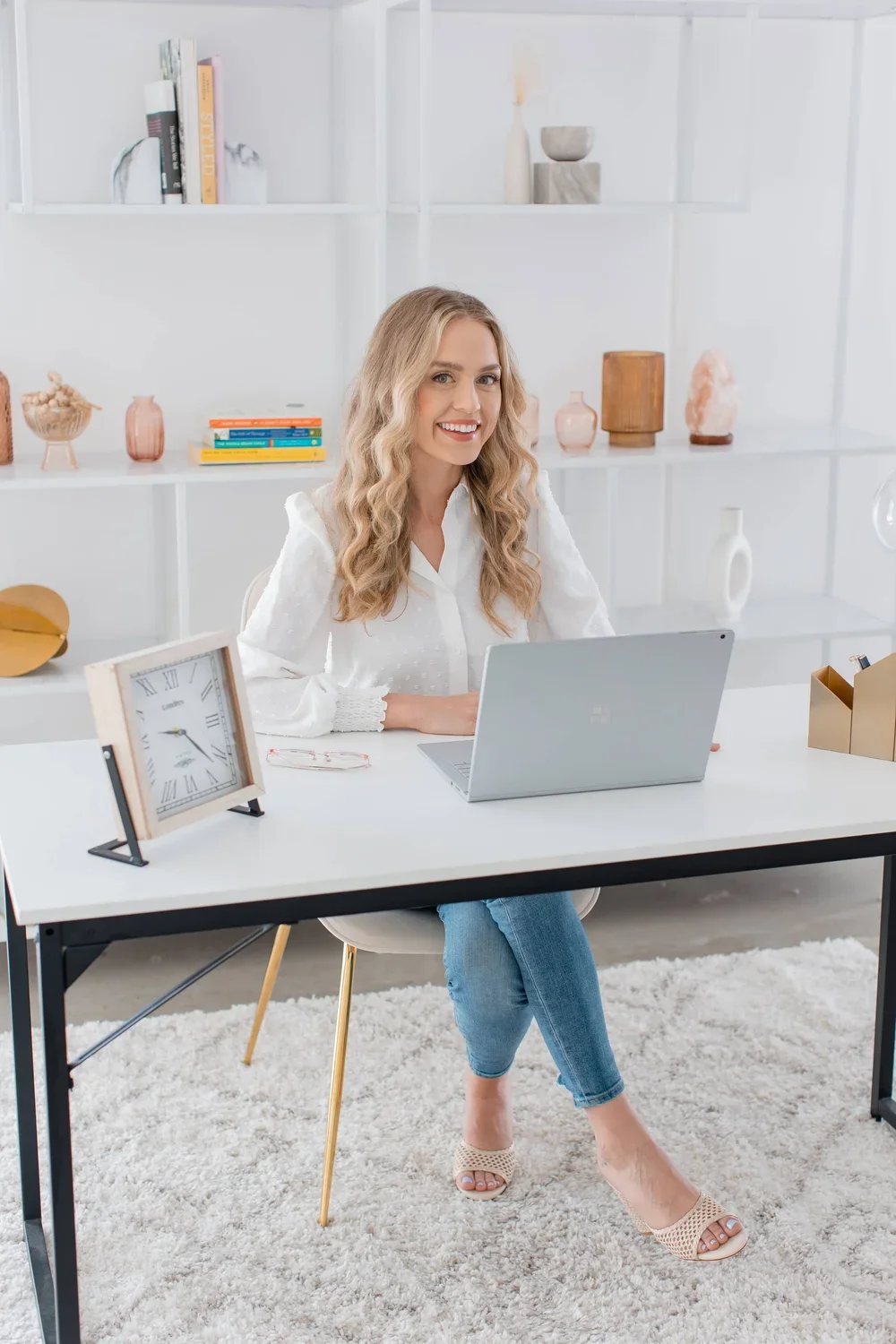
Your clinicianMeet Brooke Sundin, LMFT
I’m Brooke Sundin, a Licensed Marriage and Family Therapist and the founder of Light Minds Child and Family Therapy. I trained in SPACE, the program Eli Lebowitz developed at the Yale Child Study Center, and I’m listed in its provider directory. I use it with parents whose child is dealing with anxiety or OCD, and it is the approach I reach for when a child has decided therapy is not for them.
I’ve spent over a decade working with children, teens, and families. Many parents tell me their child can be “tough to crack,” and what they say they appreciate most is the examples of language I give them for the moments at home, which is what SPACE is built around.
I see families by telehealth throughout California, Florida, Utah, and Tennessee.
Credentials & trainingLicense: California #124192
Additional: TPMF1613 (FL), 14231277-3902 (UT), 2995 (TN)
Education: MS Marriage and Family Therapy, California State University, Long Beach
Training: SPACE (Yale Child Study Center), ACT (Institute for Better Health)
What it helpsWhat SPACE can help with
Separation and generalized anxiety
Your child needs you nearby to manage, and the worry runs ahead of every plan.
OCD rituals at home
Many rituals only work if a parent takes part (like checking, washing, or repeating phrases), and that is exactly where SPACE gets traction.
School avoidance
Weekday mornings start with a stomachache and end with a negotiation.
Reassurance seeking
The same question gets answered many times, and the relief lasts a little less each time.
Social anxiety
You speak for them at the restaurant and email the teacher on their behalf, while the list of places they’d rather not go keeps growing. The more they avoid, the smaller their world becomes.
Panic and specific phobias
The family calendar has been quietly organized around the routes and places that might set it off.
If your child’s main struggle is OCD, SPACE and exposure and response prevention are often run together, which I’ve written about further down this page.
Who I work withSPACE for parents of anxious children
This is parent-facing work, and where it fits depends on whether your child is already in therapy.


Getting startedGetting started with SPACE treatment
The first step is a free 15-minute call. You tell me what the anxiety is asking of your household, and we’ll explore whether SPACE is the right fit.
Alongside therapySPACE alongside your child’s own therapy
SPACE does not require your child to be in therapy, and it does not get in the way if they are. For OCD, exposure and response prevention stays the treatment for the child, and SPACE works on the parent side of the same rituals. For anxiety, the same holds with cognitive behavioral therapy.
When I’m seeing your child individually, I already build in parent check-ins. SPACE is a more structured version of that, for families who need the home side of things to change faster than check-ins allow. If your child sees another therapist, the two pieces of work can run side by side.
Honest fitWhen SPACE isn’t the right place to start
I would rather say this on the consultation call than three sessions in.
If there are active safety concerns, or your child needs more support than weekly outpatient care can provide, a higher level of care comes first.
SPACE also depends on parents doing the work between sessions, since the treatment does not happen in the room. If your household is in the middle of something that makes consistency impossible right now, we talk about timing before we talk about accommodations. And when your child is ready and willing to do their own therapy, that is usually where we begin.
TESTIMONIALSWhat clients say
Brooke has been extremely helpful in supporting our little one around their anxiety. She’s introduced a lot of tools for emotional regulation which has allowed our son to re-gain his confidence. Brooke also has done a great job at making sure we as parents have the tools and language to support our son at home. I highly recommend working with Brooke if you have the opportunity to!
H.L.Brooke is an exceptional clinician for children, teens, women, and for parent coaching. I highly recommend her to any family seeking support during a vulnerable or challenging time.
J.L.Common questionsQuestions parents ask about SPACE
Will SPACE work if my child never attends a session?
That is how it was tested. In the Yale trial, the SPACE group had no direct contact between the child and the therapist, and the children’s anxiety improved as much as it did for children who received CBT themselves. Your child is the patient, and you are the one in the room.
How many sessions does SPACE take?
A typical course is around twelve sessions, and the program is adjusted to the family rather than run to a fixed number. We’ll have a clearer sense after the first two or three, once the accommodations are mapped.
What age range is SPACE for?
The main randomized trial evaluated children aged 7 to 14, and subsequent research and clinical practice apply SPACE to youth ages 7 to 17. In practice the approach changes with your child’s age. With younger children the accommodations are more physical, and with teenagers they are more about reassurance, avoidance, and what the household has agreed not to mention.
Is this the same as your parent coaching?
SPACE is the structured, parent-based program at the center of it. Parent coaching is the broader service and covers things SPACE was not designed for, such as boundaries around screens or staying calm when your child is not. If anxiety or OCD is the main problem, SPACE is where we would start.
Does my child need to know we’re doing this?
Yes, and transparency is a core element of the method. Changes to an accommodation are announced to your child in advance, in a planned way, rather than sprung on them, and we work on how to say it.
Do you accept insurance?
Light Minds is an out-of-network provider. I provide superbills you can submit to your PPO for potential reimbursement.
Location & telehealthAreas we serve
I’m based in Los Angeles, CA, and licensed in California, Florida, Utah, and Tennessee. SPACE sessions take place over secure video, which suits this work, since the situations we plan for are the ones that happen in your home.
Curious whether SPACE is right for your family?
If any of this sounded like your house, that is reason enough to reach out. The free 15-minute consultation is for questions and fit, and there is no pressure to continue.