What to Look for in a Female Therapist in Los Angeles

If you’ve been searching for a female therapist in Los Angeles, you’ve probably noticed there’s no shortage of options. The hard part isn’t finding a therapist, it’s figuring out which one is actually right for you. Many women (and men) feel more comfortable opening up to a woman, and that’s a completely valid reason to narrow your search.

At Light Minds Child and Family Therapy, I specialize in supporting women and young adults experiencing anxiety, OCD, and life transitions. In my experience, the women who get the most out of therapy are the ones who take their time choosing a therapist they genuinely feel safe with. In this post, I’ll share my perspective on why that matters, how to find a female therapist in Los Angeles, and what to look for along the way.

Why Some Women Prefer a Female Therapist

There’s no rule that says you need to see a female therapist. But many women feel more at ease discussing certain topics with another woman. Experiences like body image concerns, motherhood, postpartum challenges, relationship dynamics, anxiety, or self-doubt can feel easier to explore when there’s a sense of shared understanding.

Research consistently shows that the quality of the therapeutic relationship is one of the strongest predictors of progress. If your instinct tells you you’d feel safer with a female therapist, that’s worth listening to.  Therapy works best when you feel comfortable enough to be honest. For many women, gender can be a meaningful part of that comfort.

A Bit About Me and My Practice

Brooke Sundin, LMFT, smiling and sitting at desk with laptop in front of clean white bookshelf

I’m Brooke Sundin, a licensed marriage and family therapist and the founder of Light Minds Therapy in Los Angeles. I work with children, teens, young adults, and parents who are navigating anxiety, OCD, perfectionism, depression, life transitions, and parenting challenges.

I’ve experienced my own healing journey with anxiety, so I bring both professional training and lived experience to this work. My approach draws from cognitive behavioral therapy (CBT), exposure and response prevention (ERP), and acceptance and commitment therapy (ACT), but what matters most to me is that the people I work with feel genuinely heard and supported. I see therapy as a partnership, and I want the space we create together to feel collaborative, warm, and real.

I offer virtual sessions across California, and I’m currently accepting new clients. If it sounds like I could be a good fit, you can schedule a free consultation to see if working together makes sense.

How to Find a Female Therapist in Los Angeles

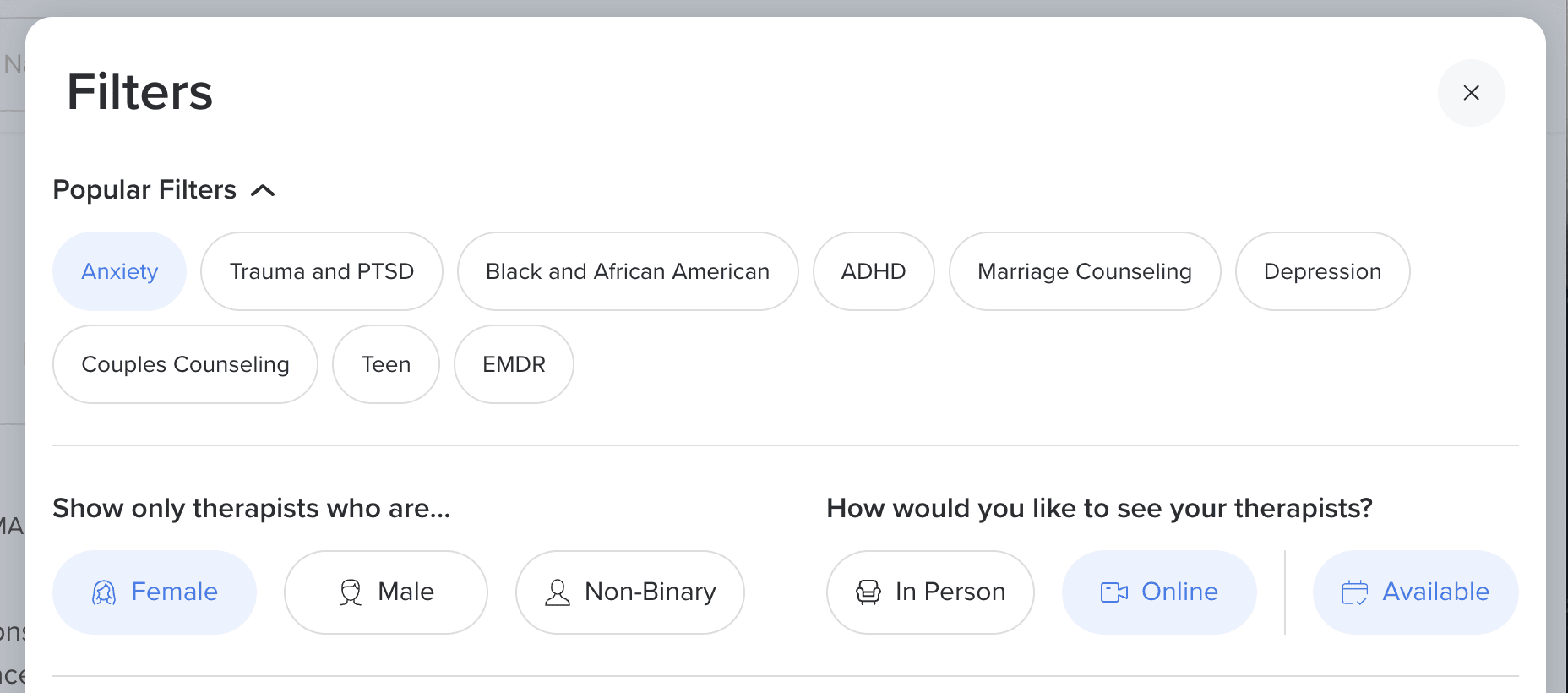
Pschology today filter drawer with filters applied for female, online, anxiety, and available.

Use Psychology Today’s filters to speed up your search process

Los Angeles has no shortage of therapists, but finding the right one still takes some effort. Here are a few places to start your search:

Psychology Today

Psychology Today’s therapist directory is one of the most widely used. You can filter by gender, location, specialty, insurance, and more. Most therapists keep their profiles relatively up to date, and many include a personal statement that gives you a feel for their style.

TherapyDen

TherapyDen is a smaller directory, but it tends to attract therapists who are particularly thoughtful about inclusivity and identity. It’s a good option if those factors are important to you.

Referrals

Ask for referrals. If you already have a therapist, doctor, or someone you trust in the mental health space, ask who they’d recommend. Personal referrals often lead to the best matches because the person providing the referral already understands your needs.

Credentials

Check credentials carefully. In California, look for licensed professionals: LMFT (Licensed Marriage and Family Therapist), LCSW (Licensed Clinical Social Worker), PsyD or PhD (Licensed Clinical Psychologist). Licensure means they’ve completed supervised clinical hours and passed state exams.

One thing I always tell people: don’t stop at the first profile that looks promising. Most therapists in Los Angeles offer a free initial consultation, so take advantage of that. A 15-minute call can tell you a lot about whether someone’s style and approach feel right for you. Here are a few questions worth asking:

  • “What’s your experience working with [your specific issue]?”

  • “What does a typical session look like with you?”

  • “How do you measure progress?”

  • “Do you offer telehealth, and what does your availability look like?”

You’ll learn a lot from the answers, but pay attention to how the conversation feels, too. That’s often the most telling part.

How to Choose the Right Female Therapist in Los Angeles

Once you’ve found a few potential therapists, in my experience, clients who end up in the best therapeutic relationships tend to consider a few key things:

  • Specialization: Does she have specific training in the issues you’re facing? A therapist who specializes in anxiety will approach your care differently than a generalist.

  • Approach: Do her methods align with what you’re looking for? For example, CBT is structured and skills-focused, while psychodynamic therapy explores deeper patterns. Neither is better, but one may suit you more.

  • Logistics: Do her availability, location, and fees work for your situation? Most therapists in Los Angeles offer telehealth, which gives you more flexibility. Many also offer evening appointments.

  • Connection: Do you feel comfortable and understood when you talk to her? This is the most important factor, and it’s something you’ll feel in the first conversation.

Most female therapists in Los Angeles charge between $150 and $300 per session. Many are private-pay only, but some provide superbills you can submit to your insurance for potential reimbursement. It’s always worth asking about this upfront.

It’s perfectly okay to meet with more than one therapist before deciding. Finding someone you trust is worth the effort.


FAQs About Finding a Female Therapist in Los Angeles

Should I specifically look for a female therapist?

There’s no universal rule. What matters most is finding someone you feel safe opening up to. If you think you’d feel more at ease with a female therapist, for any reason, trust that instinct. Your comfort with your therapist directly impacts how much you’ll get out of the process.

What if I’ve never been to therapy before?

That’s completely normal, and nothing to worry about. A good therapist will walk you through the process, answer your questions, and make sure you feel comfortable before diving into anything. The first session is really about getting to know each other and seeing if it’s a good fit.

How long does therapy usually take?

It depends on what you’re working through. Some people find a few months of focused work is enough, while others benefit from longer-term support. Your therapist will collaborate with you on goals and check in regularly so the process always feels aligned with where you are.


Find a Female Therapist in Los Angeles Today

If you’ve been weighing your options and aren’t sure where to start, I offer a free 15-minute consultation where we can talk about what you’re looking for and whether working together makes sense. And if my practice isn’t quite the right match, I’m happy to help point you in the right direction.


Brooke Sundin, LMFT
About the Author:

Brooke Sundin, LMFT

Owner and Therapist at Light Minds Child and Family Therapy

Based in Los Angeles, Brooke Sundin, LMFT, specializes in helping children, teens, young adults, and parents navigate anxiety, OCD, self-esteem issues, and major life transitions. As the founder of Light Minds, she combines over 10 years of experience with evidence-based tools to help clients get "unstuck." She currently provides telehealth therapy services to families across California, Florida, and Utah.

Learn More About Brooke
Brooke Sundin

Based in Los Angeles, Brooke Sundin, LMFT, specializes in helping children, teens, young adults, and parents navigate anxiety, OCD, self-esteem issues, and major life transitions. As the founder of Light Minds, she combines over 10 years of experience with evidence-based tools to help clients get "unstuck." She currently provides telehealth therapy services to families across California, Florida, and Utah.

https://www.lightmindstherapy.com/about
Next
Next

What to Do After College When You Feel Lost